Electric Train Set Not Moving? 7 Simple Fixes You Need To Know

You set up the track, plug in the controller, and push the throttle, and nothing happens. Or worse, the train ticks once, then sits there like it's mocking you.
Before you assume your engine is dead or your tracks need replacing, pause.
In nine out of ten cases, the problem behind a stalled electric train set is fixable and takes less than 15 minutes to sort out.
The Short Answer: It's Power, Track, or Wheels
Almost every "dead train" issue traces back to one of three things: the track isn't delivering clean power, the wheels can't pick that power up, or the controller itself is the problem. The seven fixes below cover all three.
Fix 1: Clean the Rails
This is the single most common issue and the single easiest fix. Bachmann trains (and every other brand) pick up power through the wheels touching the rails. A thin layer of oxidation, dust, or grease on the rails blocks that contact, and the train stops dead.
How to clean:
→ Wipe rails with a soft cloth and isopropyl alcohol (never WD-40)
→ Use a track-cleaning eraser for stubborn oxidation
→ Run a cleaning car every few sessions for maintenance
If your train hasn't run in months, this fix alone solves the problem 60% of the time.
Fix 2: Check Every Track Connection
Most HO model train tracks use metal connectors (called rail joiners) between sections. These tiny clips are easy to miss; if even one is loose or bent, power stops flowing past that point. This is why your train might run fine in one part of the loop and stall in another.
How to check:
→ Press down on every track joint while visually inspecting
→ Replace any joiner that looks bent, flattened, or loose
→ Tighten connections by pinching the joiner with needle-nose pliers
Fix 3: Verify the Power Supply
If cleaning and connections don't fix the problem, the power supply might be the issue. Controllers have a finite lifespan and can fail without obvious warning signs.
Quick tests:
→ Measure voltage at the track with a multimeter (12V DC is typical)
→ Swap with a known-good controller if you have one
→ Check the transformer for a burning smell or warm-to-hot temperatures when idle
A dc train controller that reads 0 volts at the track is either unplugged, failed, or disconnected internally. This is especially common on older RC train set units that have sat for decades.
Fix 4: Clean the Wheels
Wheels get just as dirty as rails. Grime builds up between the wheel and the axle, eventually blocking power from reaching the motor. A Bachmann train that's been sitting for years often needs both a track cleaning and a wheel cleaning.
How to clean wheels:
→ Flip the locomotive over on a soft cloth
→ Apply a small amount of alcohol to a cotton swab
→ Rotate each powered wheel while pressing the swab against it
You'll be shocked at how much black gunk comes off wheels that looked clean.
Fix 5: Lubricate the Motor and Gears
Old lubricant turns into a sticky paste that jams gears. If your train makes a faint whirring sound but doesn't move, dried lubricant is the likely culprit. This happens even to well-made N-scale train set locomotives that have been boxed for years.
How to relube:
→ Remove the locomotive shell to access the gears
→ Clean old lubricant with a dry cotton swab or fine brush
→ Apply a tiny drop of plastic-safe chain oil to each gear contact point
Never use WD-40 on gears. It attracts dust and degrades plastic components.
Fix 6: Check for Wheel Slippage
Modern locomotives use small rubber traction tires on one or more driven wheels. These tires grip the track to prevent wheel spin. When they wear, crack, or fall off entirely, the train still gets power but can't pull itself along.
Signs of wheel slippage:
→ The motor sounds normal but the train barely moves
→ The train runs downhill but stalls on flat track
→ You can see bare metal where rubber traction tires should be
Replacement traction tires cost almost nothing and are a 5-minute install.
Fix 7: Verify the Track Layout Has Power Everywhere
On larger layouts, the track feeder wire only connects at one or two points. Power has to travel through every rail joint to reach the far end of the loop. If there's a bad connection anywhere along the way, the train stops when it reaches that section.
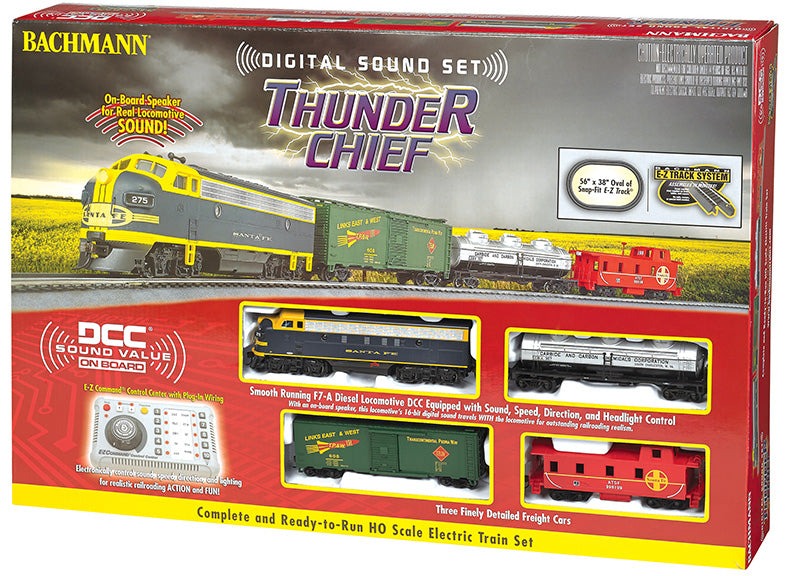
This is common on a complex Thunder chief train set layout with many turnouts and long runs.
How to fix voltage drop:
→ Add additional feeder wires every few sections for reliable power
→ Test voltage at multiple points around your loop
→ Install drop wires to any isolated section
Common Mistakes That Make Things Worse
Using household oil or WD-40 (destroys plastic and attracts dust)
Sanding wheels aggressively (removes the plating that conducts power)
Forcing a stuck locomotive to move (can strip gears permanently)
Ignoring loose connections because the train "still kind of runs"
The difference between a long-lived layout and a frustrating one is prevention. The same logic that keeps trains running also applies to every other hobby purchase — catching small wear issues early is what separates gear that lasts for decades from gear that fails in months.
When to Call It and Replace a Part
Some problems genuinely require replacement parts. Signs that a repair won't fix it:
→ Motor doesn't respond even with direct power applied
→ Visible burn marks or smell from the motor housing
→ Damaged gears with missing or broken teeth
→ Cracked chassis that no longer holds components in alignment
Even in these cases, Bachmann sells parts for models from decades ago. Full replacement is rarely needed.
Frequently Asked Questions
Q: Why does my train suddenly stop on certain parts of the track?
A: Voltage drop or dirty rails in that section. Clean the affected rails and check joiners.
Q: My train runs slow even when the controller is at max what's wrong?
A: Voltage drop from dirty rails or bad joiners. Clean and reinforce connections.
Q: The train runs forward but not backward. Why?
A: Check the controller's direction switch and the motor brushes. One brush may have failed.
Smooth Runs Start Here
An electric train set that won’t move can feel frustrating, but most issues come down to small, fixable details like track cleanliness, wheel contact, or a bit of maintenance.
A few quick checks can often get everything running again without much effort.
If you do end up needing parts or a replacement, at Hobby-Sports.com, we offer a wide range of train sets and accessories.
The most satisfying layouts are the ones that run reliably whenever you’re ready to enjoy them.

Comments
Post a Comment